If you run a business in the Liverpool City Region—whether you’re a tradesperson, a café owner, or a professional service provider—you know the market is shifting. The days when a listing in a local directory or a flyer through the door was enough are largely behind us.
Today, your customers are scrolling on their phones.
The UK currently has over 50 million active Facebook users according to recent social media statistics, and a significant portion of your local customers in Merseyside are checking their feeds daily. For a small business, this isn’t just a statistic; it is a massive opportunity to compete with national chains without breaking the bank.
Here is a straightforward, non-technical guide on how to use Facebook Ads to get more leads, booked appointments, and foot traffic for your Liverpool business.
Today, your customers are living on their phones.
The Hard Truth: Why “Posting” Is No Longer Enough
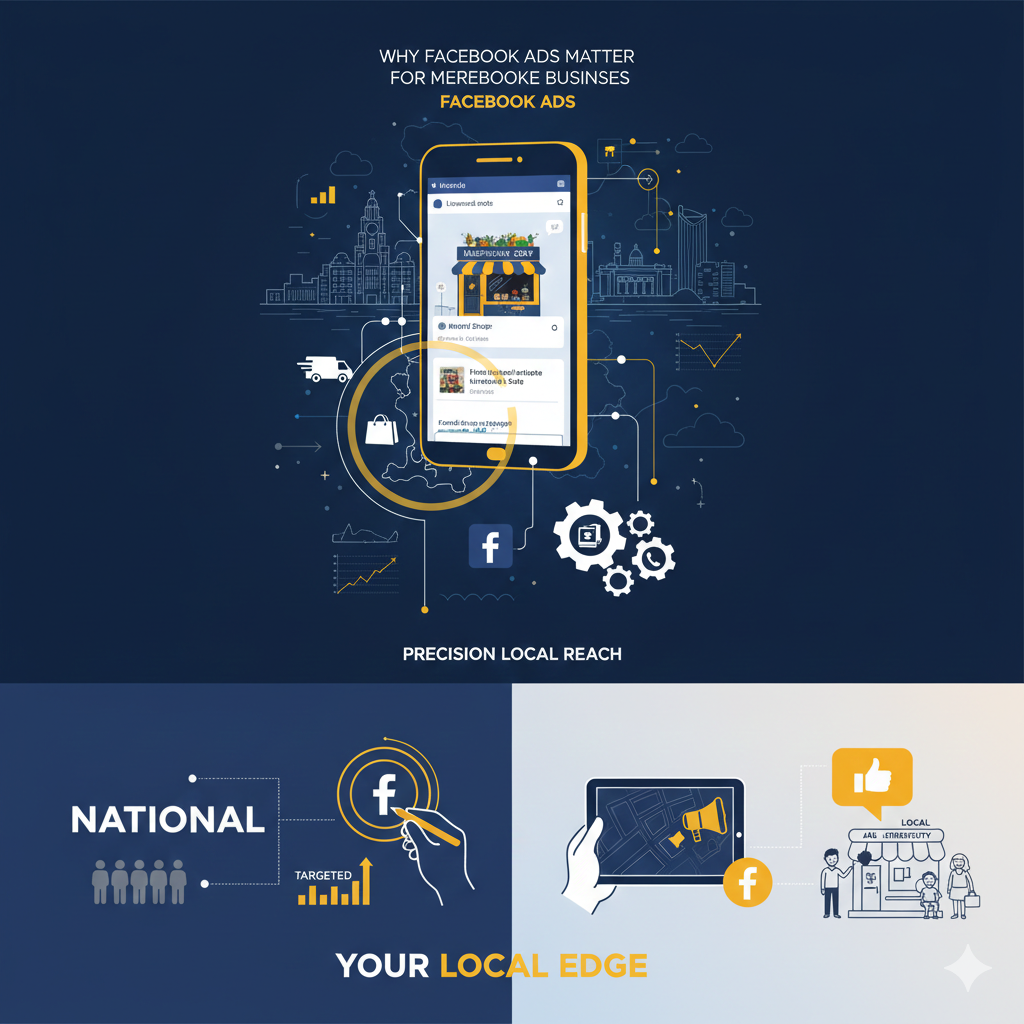
A common misconception among business owners is that “Social Media Marketing” just means posting on your Page three times a week.
Ten years ago, that worked. Today, Facebook’s algorithm has changed. It is estimated that less than 5% of your followers will see your organic (unpaid) posts. Facebook is a “pay-to-play” platform for businesses.
But here is the good news: paying for ads is actually better than posting for free.
Why Ads Manager Wins:
- Hyper-Local Targeting: You can target people specifically in L18, or draw a 3-mile radius around your shop. You stop wasting money showing ads to people in Manchester or London.
- Intent Targeting: You can find people who are interested in specific topics (e.g., “Home Improvement” or “Wedding Planning”) right now.
- Measurable ROI: Unlike a billboard on Edge Lane, you know exactly how much it cost to get the phone to ring.
Step 1: The “Boost Post” vs. Ads Manager
Before we build a campaign, we need to stop a bad habit. Stop using the blue “Boost Post” button.
It is tempting because it is easy. Facebook puts that button there to get you to spend money quickly. However, “Boosting” creates a “vanity” campaign. It optimizes for Likes and Comments, not sales. You might get 50 likes on a photo of your new stock, but if none of them come into the shop, you have wasted your budget.
** The Solution:**
Use Meta Ads Manager. This is the professional dashboard used by agencies. It allows you to choose “Objectives” like Leads or Sales, forcing Facebook’s AI to find users who are likely to actually buy from you, not just scroll past.
Step 2: How to Target Liverpool Locals Effectively
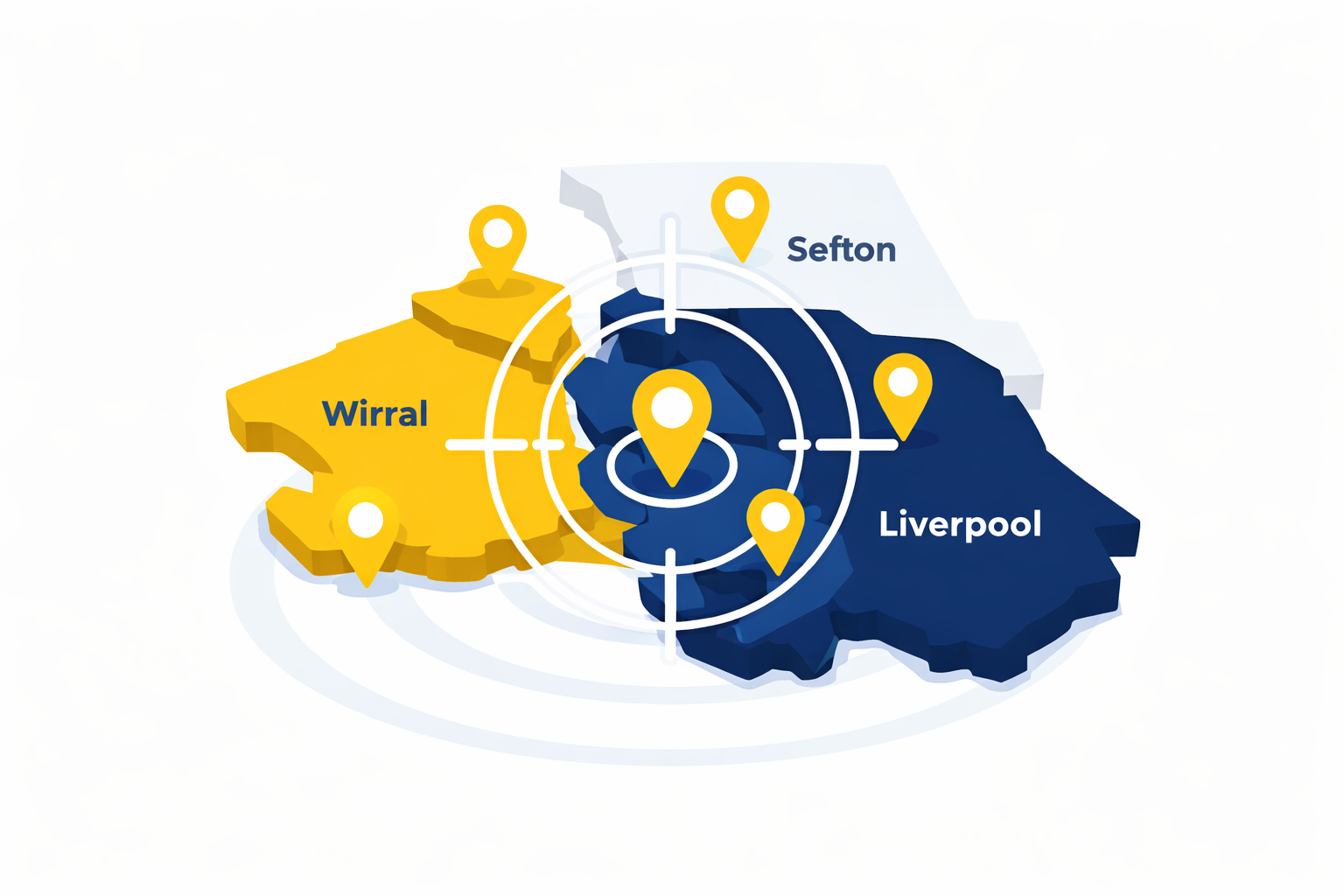
The “Audience” section of Ads Manager is your best friend. This is where you ensure you are only speaking to people in Merseyside who can actually use your service.
The “Geo-Fencing” Strategy
This is crucial for service businesses. If you are a mobile hairdresser based in Crosby, you probably don’t want to travel to Speke for a £30 appointment.
- Select Location: Choose “People living in or recently in this location.”
- Drop a Pin: You can type “Liverpool” for a broad reach, or drop a pin on your exact street address.
- Set the Radius:
- Coffee Shops/Retail: Set a strict 1–2 mile radius. People rarely drive 20 minutes for a latte.
- Trades/Services: Set a 10–15 mile radius (or cover the whole “Merseyside” county) depending on your travel limits.
Pro Tip: Use the “Exclude” feature. If you are a high-end landscape gardener and you find you get too many enquiries from areas you don’t cover (e.g., across the water in Wirral if you are based in Southport), you can specifically exclude those postcodes.
Step 3: Competing with National Chains
You might think you can’t compete with big national brands that have million-pound budgets. But in Local SEO and social ads, the small player actually has an advantage: Authenticity.
People in Liverpool are fiercely supportive of local independents. You can leverage this in your “Creative” (the images and text of your ad).
The “Real” Content Rule
National chains use glossy, perfect stock photos of models smiling at salads. They look fake.
- Do this instead: Take a photo of you holding the product. Take a video of your team working on a roof in the rain. Show the messy reality of your workshop.
- Why it works: It stops the scroll. It looks like a post from a friend, not an ad.
Use Local Language (Carefully)
You don’t need to force slang, but mentioning local context builds instant trust.
- Generic: “We offer best-in-class plumbing services.”
- Local: “Fixing boilers in Aigburth and Mossley Hill this week. Keep your home warm this winter.”
Step 4: A Simple Campaign Structure for Beginners
If you are ready to launch, follow this simple structure. Do not overcomplicate it.
1. Campaign Level: Choose “Leads”
When asked for your objective, select Leads. This tells Facebook you want user data (names and phone numbers), not just website visitors.
2. Ad Set Level: The Settings
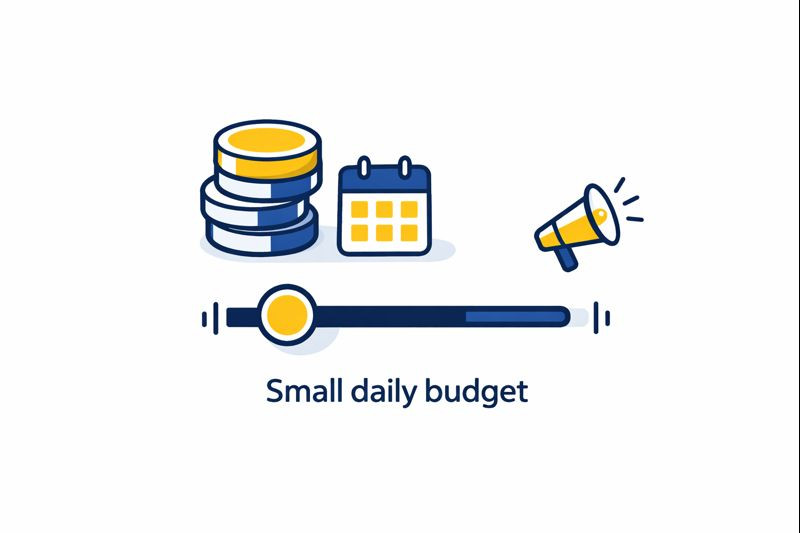
- Budget: Start small. £5 to £10 per day is enough to test.
- Audience: Liverpool + 10 miles. Age 25–65 (remove students if you sell high-ticket items like kitchens).
- Placements: Select Advantage+ placements. This lets Facebook automatically show your ad on Instagram, Facebook Feed, Stories, and Marketplace, finding the cheapest leads for you.
3. Ad Level: The Hook
- Primary Text: Call out your audience immediately. “Live in Liverpool? Worried about your MOT?”
- Headline: The offer. “Free Winter Health Check for New Customers.”
- Form: Use a Facebook Instant Form. This pops up inside the app so the user doesn’t have to wait for a website to load. Ask for Name, Phone Number, and Postcode.
Advanced Tip: The “Retargeting” Net
Have you ever looked at a pair of shoes online, and then seen ads for those shoes everywhere for a week? That is Retargeting, and you can do it too.
You can install a Meta Pixel on your website (it’s a small piece of code). This tracks everyone who visited your “Services” page but didn’t call you. You can then run a specific ad just to them saying:
“Still thinking about that extension? We have availability for quotes next week in Liverpool. Message us today.”
These ads are usually very cheap and convert very well because the person already knows who you are.
Common Mistakes to Avoid
Save your budget by avoiding these three common traps:
- Giving Up Too Soon: The algorithm takes about 4–5 days to “learn” who likes your ad. Don’t turn it off after 24 hours if you don’t have a sale.
- Ignoring Mobile Speed: If you send people to your website, check it on your phone first. If it takes more than 3 seconds to load, you are losing 50% of your traffic. Use tools like Google PageSpeed Insights to check.
- Missing the Call-to-Action (CTA): Don’t just list your services. Tell them what to do. “Tap Learn More for a Quote” or “Call us today.” You need to hold the customer’s hand.
Conclusion: Start Small, Measure, and Grow
Digital marketing can feel overwhelming, but it is just a modern version of word-of-mouth. Instead of hoping people talk about you, you are sparking the conversation yourself.
For Liverpool business owners, the barrier to entry is low. You don’t need a marketing agency to start. You just need a clear offer, a few photos of your great work, and the willingness to test.
Your Next Step:
Open Facebook Ads Manager this evening. specific your goal: Set up a “Leads” campaign with a £35 lifetime budget to run for one week. Target your local postcode + 3 miles. At the end of the week, count how many leads you got and compare the cost to printing 500 flyers. You will likely be pleasantly surprised.