Why Local SEO Fails (And How to Actually Fix It) /* DigitalOcean-style Minimalist CSS */ :root { —do-blue: #0069ff; —do-dark: #031b4e; —text-grey: #333333; —bg-light: #f3f5f9; —border-color: #e6e8eb; —code-bg: #f6f8fa; } body { font-family: -apple-system, BlinkMacSystemFont, “Segoe UI”, Roboto, Helvetica, Arial, sans-serif; line-height: 1.7; color: var(—text-grey); max-width: 800px; margin: 0 auto; padding: 40px 20px; background-color: #fff; } /* Typography */ h1 { font-size: 2.5rem; font-weight: 700; color: var(—do-dark); letter-spacing: -0.5px; margin-bottom: 0.5rem; line-height: 1.2; } h2 { font-size: 1.75rem; font-weight: 600; color: var(—do-dark); margin-top: 3rem; margin-bottom: 1rem; } h3 { font-size: 1.25rem; font-weight: 600; color: var(—do-dark); margin-top: 2rem; margin-bottom: 0.5rem; } h4 { font-size: 1rem; font-weight: 700; color: var(—text-grey); margin-top: 1.5rem; margin-bottom: 0.5rem; text-transform: uppercase; letter-spacing: 0.5px; } p { margin-bottom: 1.5rem; } a { color: var(—do-blue); text-decoration: none; font-weight: 500; transition: color 0.2s; } a:hover { color: #004bb3; text-decoration: underline; } ul { margin-bottom: 1.5rem; padding-left: 20px; } li { margin-bottom: 0.5rem; } /* Elements */ .meta-data { font-size: 0.9rem; color: #666; margin-bottom: 2rem; border-bottom: 1px solid var(—border-color); padding-bottom: 2rem; } .highlight-box { background-color: #f2f8ff; border-left: 4px solid var(—do-blue); padding: 20px; margin: 30px 0; border-radius: 0 4px 4px 0; } .tech-note { background-color: var(—code-bg); border: 1px solid var(—border-color); border-radius: 6px; padding: 15px; font-size: 0.9rem; margin-bottom: 20px; } /* Image Styles */ .img-container { margin: 40px 0; text-align: center; } /* Make images responsive */ .article-image { max-width: 100%; height: auto; border-radius: 8px; border: 1px solid var(—border-color); } .img-caption { margin-top: 10px; font-size: 0.85rem; color: #777; text-align: center; font-style: italic; } /* Tables */ table { width: 100%; border-collapse: collapse; margin: 30px 0; font-size: 0.95rem; border: 1px solid var(—border-color); } th { text-align: left; background-color: #f8f9fa; padding: 15px; border-bottom: 2px solid var(—border-color); color: var(—do-dark); font-weight: 600; } td { padding: 15px; border-bottom: 1px solid var(—border-color); vertical-align: top; } tr:last-child td { border-bottom: none; } /* Author Bio / E-E-A-T Signal */ .author-bio { margin-top: 60px; padding: 30px; background-color: #fafbfc; border: 1px solid var(—border-color); border-radius: 8px; display: flex; gap: 20px; align-items: start; } .author-avatar { width: 60px; height: 60px; background-color: var(—do-dark); color: white; border-radius: 50%; flex-shrink: 0; display: flex; align-items: center; justify-content: center; font-weight: bold; font-size: 1.2rem; } @media (max-width: 600px) { h1 { font-size: 2rem; } .author-bio { flex-direction: column; } }
If you run a business in Liverpool, your inbox is likely a graveyard of emails from “SEO Wizards” promising to get you to #1 on Google by Tuesday. It’s the digital equivalent of selling magic beans.
Most local businesses are fighting a war they can’t win using weapons from 2015. You hire agencies to rank for vanity keywords like “Best Solicitor UK,” putting you in a cage match against national giants with million-pound budgets. Meanwhile, your actual customers—people walking down Bold Street or searching from a flat in the Baltic Triangle—can’t even find your opening hours on Maps.
We recently audited 50 local sites. The verdict? 90% aren’t failing because of “bad luck.” They are failing because of technical debt and a strategy that ignores geography. Here is how to stop burning cash and start engineering a solution.
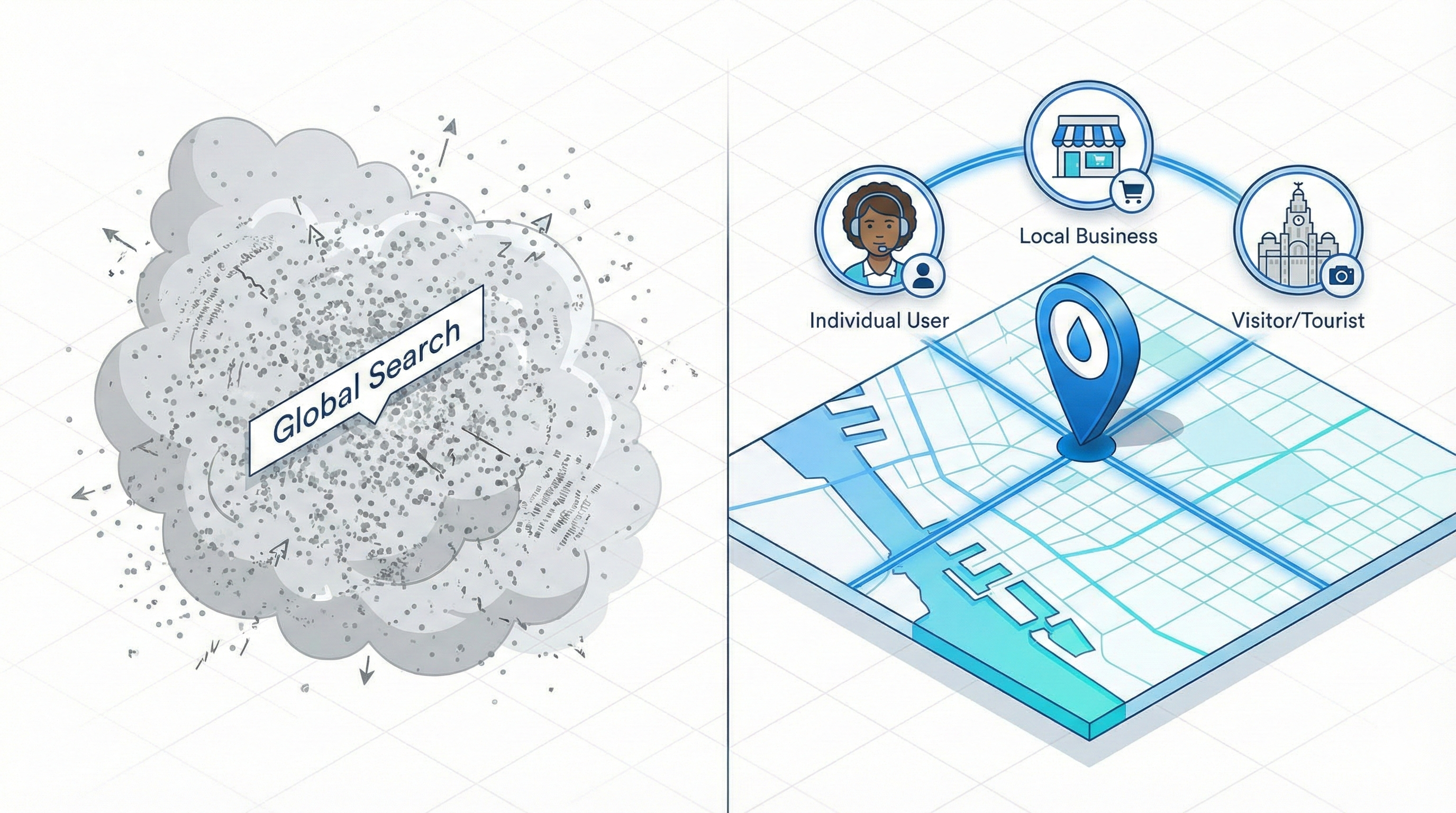
Figure 1: The difference between vanity metrics and actual business value.
1. The “Liverpool Paradox” (Vanity vs. Intent)
There is a massive difference between traffic and customers. Ranking #1 for a generic term often yields a 0.5% conversion rate. Ranking #1 for a hyper-local term often yields 4%+.
The mistake is targeting volume over intent. We call this the “Intent Ladder”:
Keyword Type
Example
Competition
Conversion Probability
Vanity (Generic)
“Best Digital Agency”
High (National)
Very Low (< 1%)
Local (Broad)
“Digital Agency Liverpool”
Medium (Regional)
Medium (~ 2%)
High-Intent (Specific)
“SEO Audit for Liverpool Restaurants”
Low (Niche)
High (> 5%)
The Fix: Stop trying to look big. Be incredibly specific. If you are a commercial cleaner, do not target “Cleaning Services.” Target “Heritage Building Cleaning for Liverpool City Centre.” It is lower volume, but it is money in the bank.
2. The “Heavy Page” Problem
Google views your website as a piece of software. If it is slow, it is broken. We frequently see local business sites—especially in hospitality—uploading raw 15MB images directly from a camera to their homepage.

Figure 2: Heavy assets create a bottleneck for mobile users.
The Physics: On a 4G connection, that page takes 12+ seconds to load.
The User Behavior: Google data confirms that 53% of users abandon a site if it takes longer than 3 seconds to load.
Tech Checklist for Speed:
- Next-Gen Formats: Convert all PNG/JPG headers to WebP. This reduces size by ~30% without quality loss.
- Lazy Loading: Ensure images below the “fold” do not load until the user scrolls to them.
- Core Web Vitals: Pay attention to LCP (Largest Contentful Paint). This should occur within 2.5 seconds.
The Audit: Open PageSpeed Insights. If your mobile score is Red (<50), you are filtering out half your customers before they even see your brand.
3. Engineering Trust (E-E-A-T)
Google’s ranking systems prioritize Experience, Expertise, Authoritativeness, and Trustworthiness (E-E-A-T). Algorithms cannot “read” your passion, but they can read your signals.
Most local sites fail this because they are anonymous. An “About Us” page that says “We are passionate about quality” is empty code to a search engine.
The Liverpool Trust Architecture:
- Localize the Footer: Do not just use a contact form. List a physical address and a local (0151) phone number. This anchors your entity to the region.
- Authorship: Every article needs a byline. “Admin” is not an expert. “Sarah, Senior Surveyor” is an expert.
- Local Schema (JSON-LD): You must inject code into your header that explicitly tells Google “We are a LocalBusiness located at [Coordinates]”. Without this, Google has to guess.
4. The Google Business Profile (GBP) Reality
Your website is the engine, but your Google Business Profile is the paint job. You can rank #1 organically, but if you have a 3.2-star rating or no photos on Maps, you will lose the click.
To dominate the “Map Pack” (the map at the top of search results), focusing on Proximity isn’t enough. You need Prominence:
- Review Velocity: Getting 1 review every month is better than getting 20 reviews in one day and then silence for a year.
- Visual Proof: Google’s AI can “see” photos. Upload photos of your team, your shop front, or your completed projects weekly. It signals that the business is alive and active.
- Categories: Ensure your primary category is accurate. If you are a “Pizza Restaurant,” do not just list “Restaurant.”
The Recovery Timeline
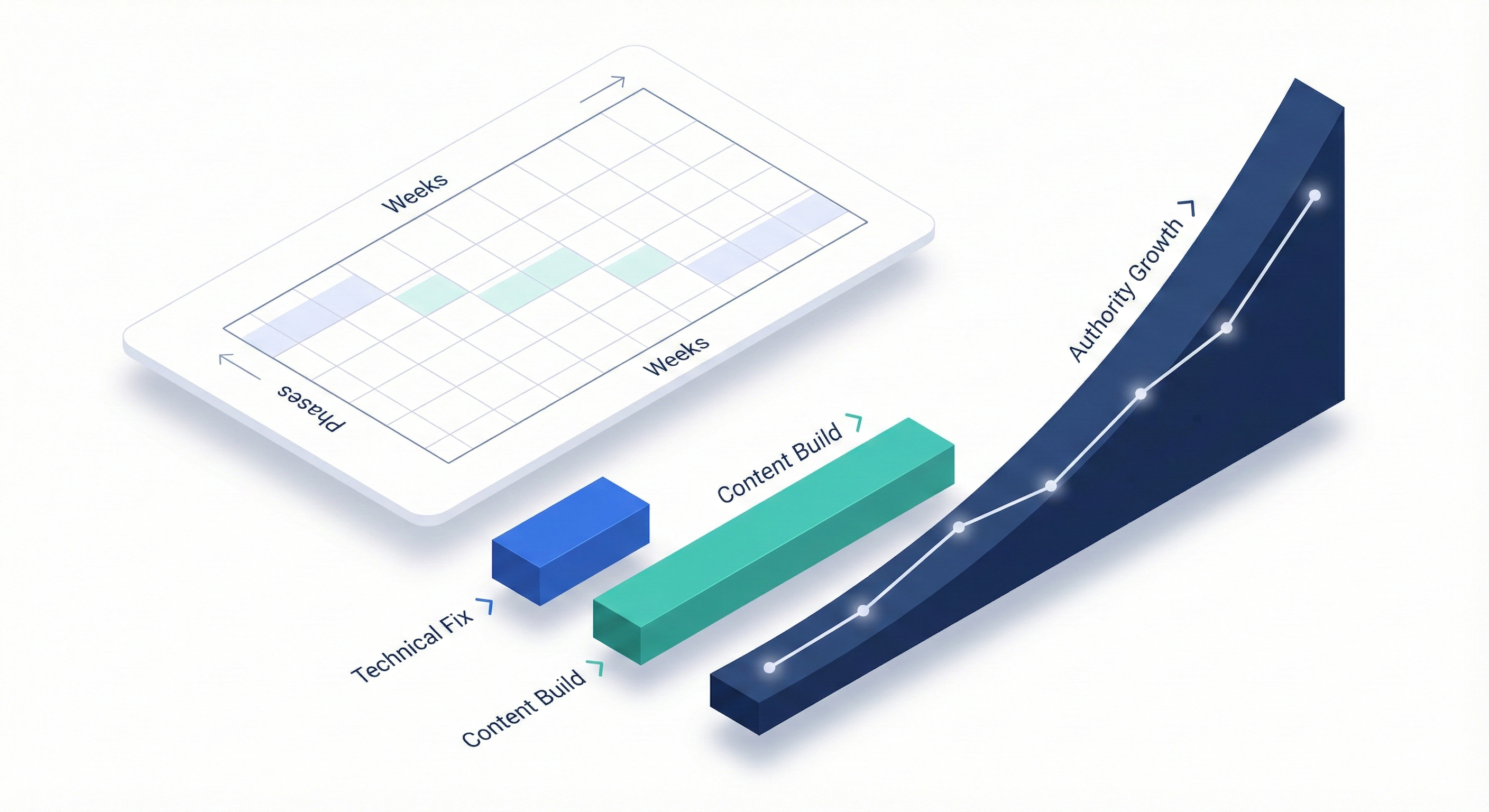
Real SEO is not a switch; it is an asset you build. Here is a realistic deployment schedule for a recovered site:
Timeline
Activity
Expected Outcome
Month 1 (The Fix)
Technical audit, image compression, schema markup, and GBP Verification.
Traffic may dip slightly as Google re-crawls your site. Core Web Vitals turn green.
Month 3 (The Build)
Publishing deep, local content clusters (e.g. “Guides to Liverpool [Industry]”).
“Impressions” (visibility) begin to climb steadily. You appear for long-tail queries.
Month 6 (The Asset)
Authority building (local press/links) and Review Management.
Consistent, high-quality leads begin. You own the “Near Me” searches for your niche.
Next Steps
You cannot fix what you do not measure. Start by verifying your site speed on PageSpeed Insights.
If you want a human eye on your technical stack, check out our Liverpool SEO Audit Services for a detailed breakdown.